
Have you ever taken a personality test and thought, “That option sounds like me—but so does this other one!”? If so, you are not alone. Very few people align exactly with one personality type, whether you are taking a silly magazine quiz or a complete behavioral assessment.
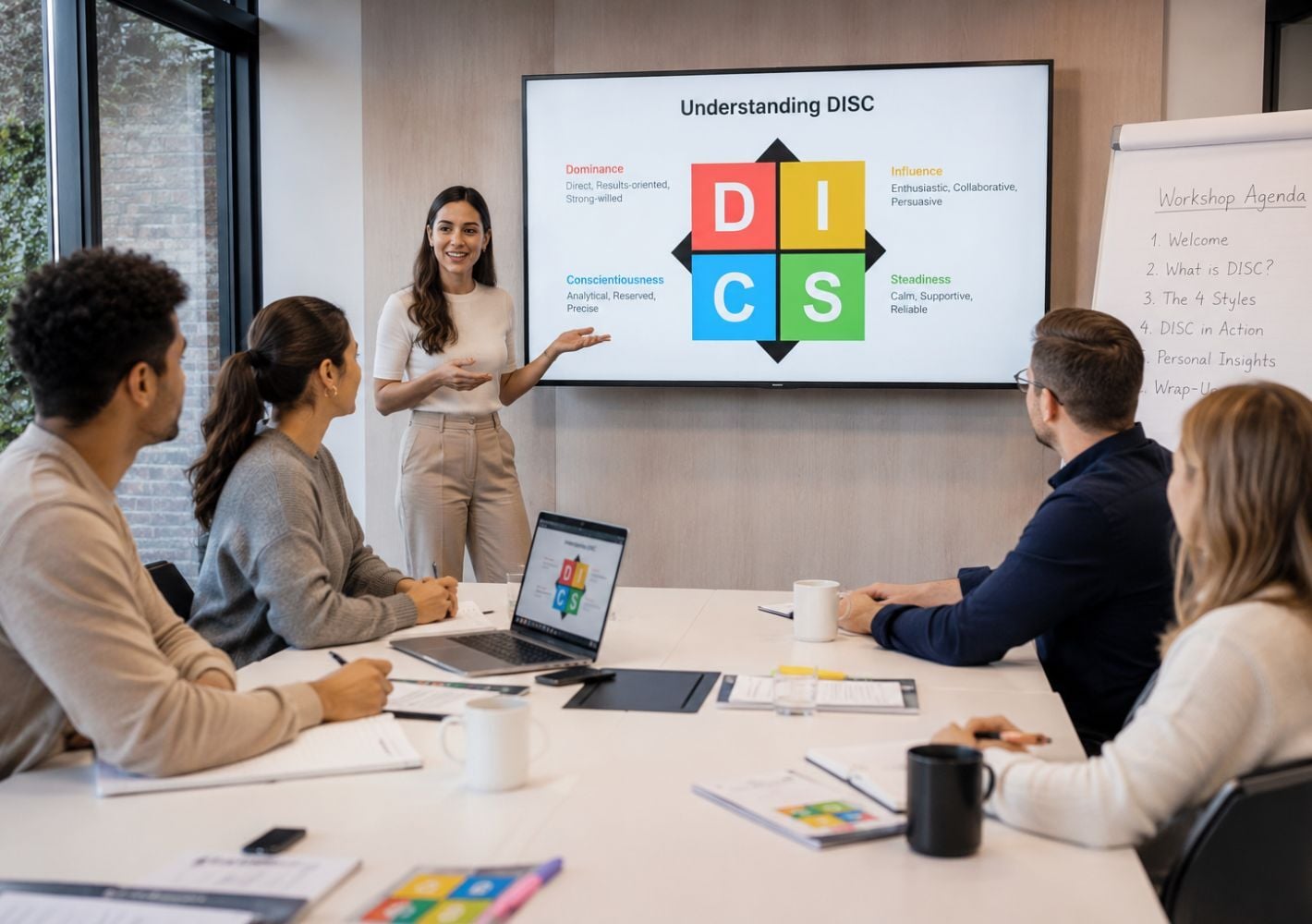
This same truth holds for the DISC personality system. DISC identifies four primary behavioral styles: D, I, S, and C. Each style offers insight into how people communicate, approach tasks, respond to challenges, and interact with others. But DISC is not about squeezing people into four rigid boxes. It is about understanding the unique combination of behavioral tendencies that makes each person who they are.
If you have ever wondered why you don't fit perfectly into one personality type, a deeper look at your DISC profile may provide the answers.
Can You Have Multiple DISC Types?
In short, yes! People often recognize characteristics of more than one DISC style in themselves, and their assessment results can reflect that combination. Consider these examples:
- D and I: You enjoy taking initiative, pursuing ambitious goals, and persuading others to embrace your ideas. You may be comfortable leading a project while keeping the team energized and engaged.
- I and S: You value relationships, enjoy collaboration, and want people to feel included. You may bring enthusiasm to a group while providing the patience and encouragement that help others succeed.
- S and C: You appreciate stability, consistency, and careful planning. You may be a dependable team member who values accuracy and prefers to think through changes before acting.
- D and C: You are focused on achieving results, but you also want those results to be supported by facts and sound decisions. You may combine a direct communication style with high expectations for quality.
These combinations are just a few examples of how multiple DISC types can appear in one individual. Your own behavioral profile may include characteristics of all four styles in different proportions.
Keep in mind that DISC describes behavioral preferences, not the entirety of your personality. Your experiences, responsibilities, environment, and relationships can all influence how those preferences appear in different situations.
Why Your Behavior May Vary in Different Situations
Have you ever noticed that you communicate differently with your colleagues than you do with your family? Or that you become more decisive under pressure but more deliberate when making an important personal decision?
When examining behavioral preferences, the context matters. For example, a person who generally prefers cooperation and stability may become more assertive when protecting a team member. Someone who typically enjoys social interaction may become more analytical when working through a complex problem. Understanding how multiple DISC types can appear in a single profile can help explain these variations without labeling them as inconsistencies.
No combination of personality styles is inherently better than another. Each offers potential strengths, and each may present challenges depending on the circumstances. The goal is to understand how your different tendencies work together and how to use them more effectively.
Why a Quick Online DISC Test Does Not Tell the Whole Story
Free personality quizzes can be a fun introduction to DISC. They may help you recognize familiar behavioral tendencies and give you a starting point for self-reflection.
However, a brief quiz or a simple personality label often leaves important questions unanswered.
If a quiz tells you that you are a “D” or an “I,” for example, you might wonder how your other characteristics fit into the picture. Why do you sometimes prefer to take charge but, in other situations, prioritize harmony? How do your behavioral preferences influence your communication with different people? What happens when your natural tendencies conflict with the demands of your role?
A comprehensive DISC report can help you explore these questions in greater depth. PeopleKeys offers a variety of high quality assessments, including DISC, TEAMS, Values, and BAI, that work together to provide a fuller view of human behavior and motivation.
Rather than stopping at a single personality label, a detailed report provides a more nuanced understanding of your behavioral patterns, strengths, communication preferences, and potential areas for growth. Depending on the report, you can also explore the thinking styles, values, and underlying motivators that influence how you approach work and relationships.
The difference between a free quiz and a complete report is practical: identifying a personality type is interesting, but understanding how your behavioral tendencies affect your decisions, relationships, and performance gives you information you can put to use.
Go Beyond Your DISC Type with a PeopleKeys Report
PeopleKeys offers several assessment options, allowing you to choose the level of insight that best fits your goals.
The PeopleKeys DISC Report uncovers your behavior and communication style across the four personality types. For those who want to explore the factors behind their behavior, you can add one, two, or three more of our assessments for greater insight.
- TEAMS: Optimizes teamwork and collaboration by identifying a team’s strengths, challenges and opportunities
- Values: Explores the fundamental values and motivations that guide your personal and professional life
- BAI: Examines the attitudes and mindsets you hold toward specific behaviors and activities
If you have ever felt that a single personality label doesn't adequately describe you, PeopleKeys’ assessment options offer an opportunity to explore the many dimensions that make up your behavioral profile.
Turn Self-Awareness into Personal and Professional Growth
Understanding your DISC profile is about more than finding the perfect label. It is about gaining practical insight into how you interact with others, approach challenges, and contribute to your workplace and relationships.
When you recognize your behavioral strengths, you can use them more intentionally. When you are clear-headed about potential blind spots, you can identify opportunities for growth. And when you appreciate that others may approach situations differently, you can adapt your communication and collaborate more effectively.
You don't have to fit neatly into one personality type to benefit from DISC. In fact, understanding the nuances of your behavioral profile may be the most valuable part of the process.
Ready to discover more about what makes you YOU? Explore the PeopleKeys assessment collection and find the right tool for your goals.